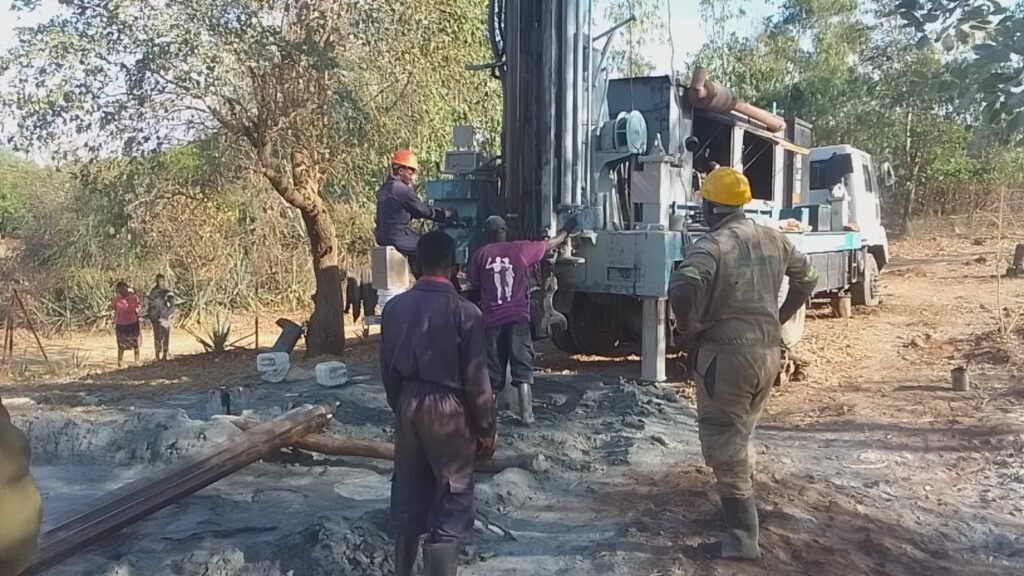
For commercial farmers in Kenya, relying entirely on unpredictable rainfall patterns is a major financial risk. Crop failures in high-value investments like onion and cabbage production often happen because of water stress during critical growth stages. To build a resilient, smart farm, securing a permanent water source is essential. https://www.youtube.com/watch?v=Nm8ICEsAdwI
Drilling a borehole in Kenya is the most reliable way to guarantee year-round irrigation water, but it requires careful navigating of legal permits, geological science, and specific engineering phases. Moving ahead without a structured plan can lead to dry wells, structural collapses, or severe government fines.
This definitive guide breaks down the technical stages, required regulations, and baseline costs to ensure your agricultural borehole investment is a success.
Phase 1: Hydrogeological Survey and Legal Permits
You cannot legally dig a commercial well in Kenya without getting regulatory approvals first. Skipping these steps can lead to immediate stop-orders from authorities and potential fines up to 1 million shillings or imprisonment.
[Hydrogeological Survey] ➔ [WRA Authorization] ➔ [NEMA EIA License] ➔ [County Clearances]
-
- Hydrogeological Survey: You must hire a qualified, registered geologist to assess underground aquifers, estimate water depth, and determine potential yields. The geologist will compile a formal hydrogeological survey report required for all subsequent permits.
- Water Resources Authority (WRA) Permit: Submit your survey report along with land ownership documents via the e-Citizen portal. The WRA will review the application to ensure your well maintains a safe distance from other water sources (ideally 100 to 200+ meters apart) before granting a drilling authorization.
- NEMA Environmental Impact Assessment (EIA): An accredited environmental expert must assess how the drilling impacts the local ecosystem. The National Environment Management Authority (NEMA) reviews this EIA report to issue an official environmental compliance license.
- County & Provider Approvals: Secure a development permit from your local county government and a “Letter of No Objection” from your regional water services provider.
Phase 2: Choosing Certified Drilling Companies in Kenya
Never choose a contractor based on cheap pricing alone. Standard commercial rates for reputable, licensed contractors range between KES 6,000 to KES 9,000 per meter depending on regional geology. Quotes falling below KES 5,500 per meter often indicate cut corners, uncertified casing materials, or hidden fees like unexpected standby charges.
Estimated Borehole Drilling Cost in Kenya by County
The structural variance of the ground impacts total project timelines and expenses. Wet drilling in loose soils requires heavy casing stabilization, while hard rock drilling proceeds more slowly.
| Region / County | Estimated Base Cost per Meter | Typical Aquifer Depth |
|---|---|---|
| Nairobi / Kiambu | KES 6,000 – KES 7,500 | 150m – 250m |
| Uasin Gishu (Eldoret) | KES 5,800 – KES 6,100 | 100m – 180m |
| Narok / Rift Valley | KES 6,800 – KES 9,500 | 150m – 200m |
| Coastal Region (Kilifi/Kwale) | KES 7,500 – KES 9,500 | 140m – 200m |
Phase 3: The Technical Drilling and Construction Process
Once the rig mobilizes to your site, the physical engineering follows five strict milestone steps:
-
- Physical Drilling: The rig sinks an 8-to-10-inch diameter hole using mud rotary bits for loose soils or air hammers for hard rock strata.
- Casing Installation: Heavy-gauge PVC or mild steel casing pipes are lowered into the raw well. Slotted screen casings are placed precisely adjacent to water-bearing aquifer zones to allow water inflow while blocking dirt.
- Gravel Packing: Sized, washed silicate gravel is poured into the space between the casing pipe and the open borehole wall. This gravel pack acts as a mechanical filter to prevent sand from entering your pump.
- Well Development: High-pressure air is flushed down the well for several hours to clear out rock slurry, drilling mud, and debris, leaving the water clear.
- Test Pumping & Lab Analysis: A continuous 24-hour test pump is mandatory. This determines the well’s sustainable recovery rate (how fast the aquifer recharges). A water sample must also be taken to a government laboratory to verify chemical safety for agricultural crops.
[Drilling & Excavation] ➔ [Casing & Screening] ➔ [Gravel Packing] ➔ [Flushing / Development] ➔ [Test Pumping]
Phase 4: Equipping with Solar Water Pumps
For modern agribusinesses, powering a deep well with a diesel generator or an unreliable electrical grid creates high overhead costs. Integrating a solar water pump system offers an efficient alternative.
-
- Sizing the Pump: Never buy a pump before your test pumping report is generated. The pump size must accurately match the specific depth (head) and flow rate of your well to prevent dry-running or burning out the motor.
- Solar Array Installation: An array of solar panels combined with a specialized solar variable speed inverter will run your pump directly from sunlight, filling your farm storage tanks completely free of operational utility costs.
- Sanitary Top Seal: Cast a concrete apron block around the mouth of the borehole and lock it down with a sealed well cap to ensure no dirty surface rainwater or agricultural pesticides contaminate your clean aquifer.
Summary Checklist for Farmers:
- Hire a licensed geologist for the survey.
- Secure WRA, NEMA, and County construction permits.
- Vet drilling contractors based on verified references and clear itemized quotes.
- Confirm the 24-hour test pumping is executed and analyzed.
- Test water quality for agricultural salinity levels.
- Size your solar pumping system based on your certified test yield data.
- Submit the final Borehole Completion Record (BCR) to WRA to secure your 5-year Water Extraction Permit.