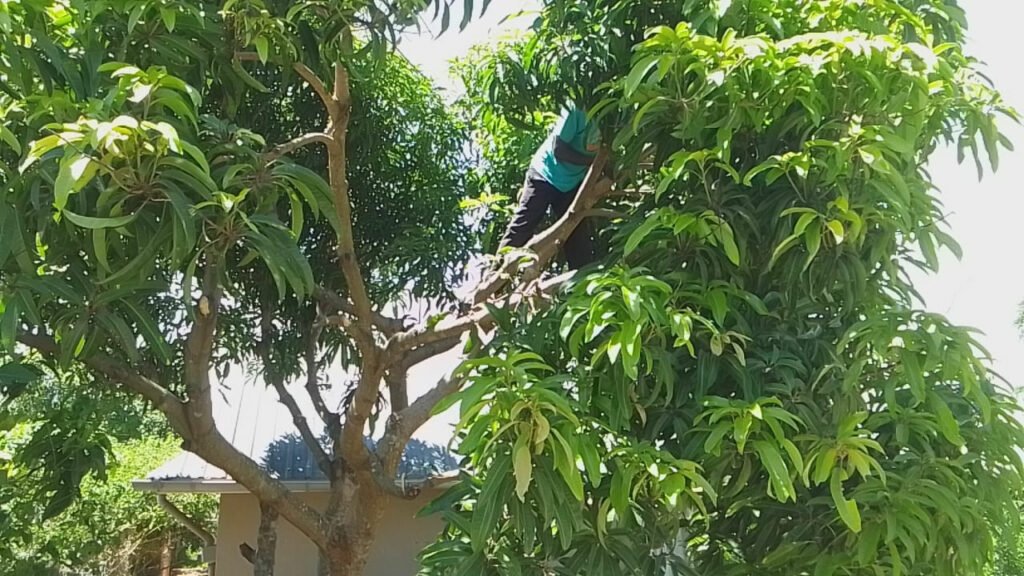
Mango trees are among the most valuable fruit crops grown at Savannah Farms. Proper orchard management practices—especially pruning—play a critical role in maintaining healthy trees, improving fruit quality, and increasing overall productivity. While mango trees can grow naturally without pruning, regular and strategic pruning offers significant benefits that every farmer should understand.
1. Improves Sunlight Penetration
A dense mango canopy prevents sunlight from reaching the inner branches and lower parts of the tree. Pruning opens up the canopy, allowing sunlight to penetrate throughout the tree.
Benefits of Adequate Sunlight:
- Better flowering
- Improved fruit development
- Enhanced fruit color and sweetness
- Reduced fruit drop
Trees that receive sufficient sunlight generally produce higher-quality fruits with greater market value.
2. Enhances Air Circulation
Poor airflow within a crowded canopy creates favorable conditions for fungal diseases such as anthracnose and powdery mildew. Pruning improves air circulation, helping leaves and fruits dry quickly after rainfall or irrigation.
Key Benefits:
- Reduced disease incidence
- Healthier foliage
- Lower dependence on fungicide applications
- Improved overall tree vigor
3. Increases Fruit Yield
Regular pruning stimulates the growth of new shoots, which become future fruit-bearing branches. Since mango flowers are typically produced on mature shoots, encouraging healthy new growth is essential for sustained production.
Proper Pruning Helps To:
- Balance vegetative growth and fruiting
- Encourage productive branches
- Maintain consistent annual yields
4. Facilitates Pest and Disease Management
Dense canopies make it difficult to monitor and control pests such as fruit flies, mango seed weevils, scales, and mealybugs. Pruned trees allow easier inspection and more effective application of crop protection products.
Results Include:
- Better pest control
- Lower infestation levels
- Reduced crop losses
- Healthier fruits for consumers
5. Makes Harvesting Easier and Safer
Unpruned mango trees can become excessively tall, making harvesting difficult and potentially dangerous. Pruning helps maintain manageable tree heights, allowing workers to harvest fruits safely and efficiently.
Advantages:
- Reduced labor costs
- Less fruit damage during harvesting
- Improved worker safety
- Faster harvesting operations
6. Improves Fruit Size and Quality
When a tree has too many branches competing for nutrients and water, fruit quality may decline. Pruning removes unnecessary growth, allowing the tree to direct more resources toward fruit production.
Farmers Often Observe:
- Larger fruits
- Better fruit uniformity
- Improved sweetness and flavor
- Higher market prices
7. Removes Dead, Diseased, and Damaged Branches
Dead and diseased branches serve as entry points for pests and pathogens. Regular pruning removes these problem areas before they spread to healthy parts of the tree.
Sanitation Pruning Helps:
- Protect tree health
- Prevent disease spread
- Extend orchard lifespan
- Improve orchard appearance
8. Maintains the Desired Tree Shape
Well-shaped trees are easier to manage and more productive. Pruning allows farmers to develop a strong framework of branches capable of supporting heavy fruit loads while resisting wind damage.
A Properly Shaped Mango Tree:
- Has a balanced canopy
- Produces more evenly distributed fruit
- Is less susceptible to branch breakage
- Remains productive for many years
Best Time to Prune Mango Trees
The ideal time to prune mango trees is immediately after harvesting. This gives new shoots enough time to develop and mature before the next flowering season.
Note: Avoid heavy pruning during flowering and fruit development stages, as this may reduce the upcoming harvest.
Savannah Farms Recommendation
At Savannah Farms, we recommend annual maintenance pruning combined with the regular removal of dead, diseased, and crossing branches.
- Young mango trees: Require formative pruning to establish a strong structure.
- Mature mango trees: Benefit from canopy management to maintain productivity and fruit quality.
A well-pruned mango orchard is healthier, easier to manage, and more profitable. Investing time in proper pruning practices can significantly increase fruit yield, improve fruit quality, and ensure long-term success for mango farmers.
About Savannah Farms
Savannah Farms is a leading producer of high-quality mangoes, citrus fruits, vegetables, and livestock products in Makueni County, Kenya. We are committed to sustainable farming practices that improve productivity while protecting the environment and supporting local communities.