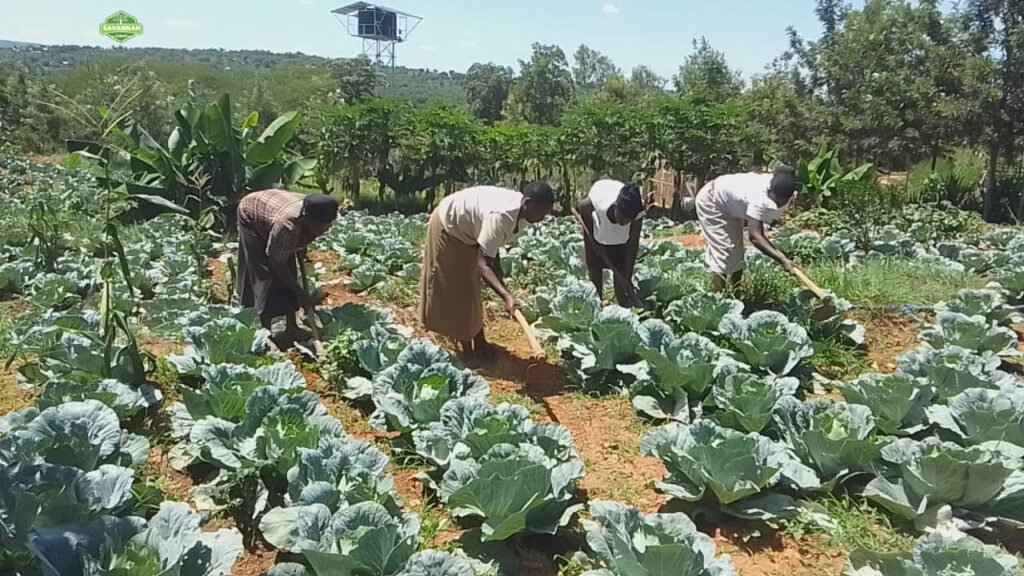
Consumers often notice that cabbages grown in Kenya’s upland regions such as the Rift Valley and Central Kenya have a different taste, texture, and appearance compared to those grown in semi-arid counties like Makueni. While all cabbages belong to the same crop family, the environment in which they are grown significantly influences their flavor, sweetness, crispness, and overall quality.
At Savannah Farms, we frequently receive questions from customers about why our cabbages sometimes taste different from those sourced from highland regions. The answer lies in climate, soil conditions, water availability, and plant stress levels.
The Role of Climate
The Rift Valley and Central Kenya regions enjoy cooler temperatures, higher rainfall, and fertile volcanic soils. Areas such as Limuru, Nyandarua, Molo, Njoro, and parts of Kiambu experience average temperatures ranging between 10°C and 24°C.
Makueni County, on the other hand, is characterized by:
- Higher daytime temperatures
- Lower annual rainfall
- Greater sunshine intensity
- Longer dry periods
These climatic differences affect how cabbages grow and develop their flavor compounds.
Cooler Temperatures Produce Sweeter Cabbages
Cabbages grown in cooler highland climates mature more slowly. This slower growth allows plants to accumulate natural sugars over a longer period.
As a result, highland cabbages often have:
- A slightly sweeter taste
- Softer flavor profiles
- Tender leaves
- Mild bitterness
The slower development process contributes to the crisp, juicy texture many consumers associate with Rift Valley and Central Kenya cabbages.
Heat Stress Can Intensify Flavor
In semi-arid regions like Makueni, cabbages are exposed to higher temperatures and stronger sunlight.
When plants experience moderate environmental stress, they often produce more protective compounds known as glucosinolates. These natural compounds are responsible for the characteristic cabbage flavor and slight bitterness.
Consequently, Makueni-grown cabbages may have:
- A stronger cabbage taste
- Slightly more bitterness
- Firmer texture
- Higher dry matter content
Many consumers actually prefer this richer flavor for traditional Kenyan dishes.
Water Availability Affects Taste and Texture
Water plays a major role in determining cabbage quality.
Highland areas typically receive consistent rainfall throughout the growing season. This steady moisture encourages rapid growth and higher water content in cabbage heads.
In irrigated semi-arid farms such as Savannah Farms, water is carefully managed to maximize efficiency.
This often results in cabbages that are:
- More compact
- Denser
- Heavier
- Longer-lasting after harvest
Because they contain slightly less water than highland-grown cabbages, their flavor can appear more concentrated.
Soil Differences Influence Flavor
The fertile volcanic soils of Central Kenya and parts of the Rift Valley contain abundant organic matter and minerals that support vigorous plant growth.
Makueni soils vary widely and are often:
- Sandy loams
- Red soils
- Well-drained soils
- Lower in organic matter
Farmers compensate through proper fertilization, manure application, and soil improvement practices. However, differences in soil mineral composition can still contribute to subtle variations in taste and texture.
Sunlight Intensity Makes a Difference
Semi-arid areas receive more hours of direct sunlight than cooler highland regions.
Increased sunlight promotes photosynthesis and can lead to:
- Tighter cabbage heads
- Increased nutrient concentration
- Enhanced flavor intensity
- Improved shelf life
This is one reason why cabbages from Makueni often remain fresh longer during transportation and storage.
Variety Selection Matters
Taste differences are not caused by climate alone.
Farmers in different regions often grow different cabbage varieties. Popular varieties such as Baraka F1, Pruktor F1, Gloria F1, and Riana F1 each possess unique characteristics.
Factors influenced by variety include:
- Sweetness
- Leaf texture
- Head density
- Maturity period
- Disease resistance
Even when grown under similar conditions, different varieties can produce noticeably different flavors.
Which Cabbage Is Better?
The truth is that neither is necessarily better.
Highland cabbages are often preferred for:
- Fresh salads
- Coleslaw
- Light cooking
- Consumers seeking a mild flavor
Semi-arid cabbages such as those grown in Makueni are often preferred for:
- Traditional Kenyan dishes
- Stews
- Stir-fries
- Markets requiring longer shelf life
Each growing environment produces unique characteristics that appeal to different consumers and market segments.
The Savannah Farms Advantage
At Savannah Farms in Makueni County, we combine modern irrigation systems, improved seed varieties, proper soil nutrition, and sustainable farming practices to produce high-quality cabbages with excellent flavor, firmness, and shelf life.
Our semi-arid climate allows us to supply fresh cabbages throughout much of the year, even when production in some highland regions is affected by excessive rainfall or disease outbreaks.
Whether grown in the cool highlands of Central Kenya or the sunny landscapes of Makueni County, cabbages remain one of Kenya’s most important and nutritious vegetables. Understanding how climate and environment influence taste helps consumers appreciate the unique qualities each region brings to the table.
About Savannah Farms
Savannah Farms is a leading agricultural enterprise located in Makueni County, Kenya. We specialize in the production of premium-quality vegetables, fruits, livestock products, and agricultural services while promoting sustainable farming practices that support food security and rural livelihoods.